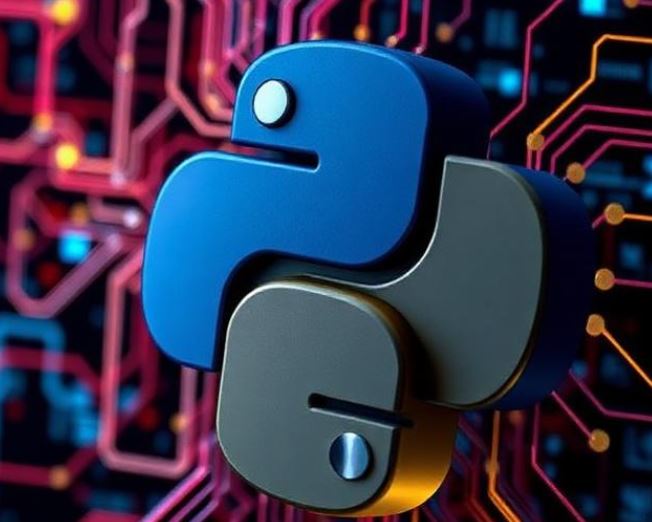
Artificial Intelligence is one of the most used technologies among different industries. When you look at how modern artificial intelligence works, and things such as ChatGPT or self-driving cars. You may also find that one of the main programming languages behind this all is Python. Well, this happens by chance, and Python is becoming one of the most common languages that is used for building different AI systems.
In fact, more than half of the data scientists, as well as machine learning experts, use Python as their main language. If you are looking to become a Python developer, taking the Python with AI Course can help you achieve this goal. As AI is used everywhere, taking this course can really help you understand all these things. So let’s begin discussing this in detail:
Ways in which Python Dominates AI:
Here, we have discussed how Python Dominates AI in detail. If you have already taken the Agentic AI Course, then this can help you understand these ways easily.
Simplicity That Actually Matters
Well, most of the AI researchers are not traditional programmers. They come from math departments, statistics programs, or specialized scientific fields. They think in equations and algorithms, not in programming constructs. Python’s syntax feels natural to them because it looks like pseudocode or mathematical notation they already know.
There is a neural network code that would take hundreds of lines in Java or C++, written in maybe a dozen lines of Python.
The Ecosystem Changed Everything
Python didn’t conquer AI alone. It built an army of libraries that made complex tasks simple.
NumPy started the revolution by making numerical computing actually practical in Python. It handles multi-dimensional arrays efficiently – and arrays are basically the foundation of every AI algorithm. This is why SciPy, Pandas, and Matplotlib were built on top of that, which can help create a complete environment with specialized environments such as MATLAB.
When Google released TensorFlow in the year 2015, they chose Python as the primary way to use this. But Facebook’s PyTorch came out in 2016 with the same choice. They were not just random decisions, but both of these companies have recognized that Python had already won over AI researchers.
Today, many of the major AI framework uses Python as either their main interface or their only high-level interface. Scikit-learn made traditional machine learning accessible to everyone with its clean, consistent API. Keras simplified deep learning with an elegant design.
Speed Isn’t Everything:
People always complain that Python runs slowly. And yeah, they’re not wrong. But here’s the thing that’s not really how Python gets used in AI work. Python serves as a high-level of orchestration layer, while computationally intensive operations drop down to highly optimized C, C++, or CUDA code.
So when you’re using NumPy or training a model in PyTorch, the actual hard work happens in that fast compiled code. Python just makes it easy to tell the code what to do. You get the best parts of both. Python keeps things simple when you’re testing ideas and writing logic. The compiled code handles the work at full speed.
These days, tools like Numba and JAX make things even better. They can take your Python code and compile it on the fly. You still write in Python, but it runs almost as fast as C.
Everyone Uses It.
Python’s popularity with AI is making people use this, due to which more tools are being built for the same. Those new tools bring in more users. Nowadays, many schools are teaching AI with Python. When students graduate and get jobs, they already know it. When a company wants to start an AI project, Python makes sense. There are tons of developers who know it, plenty of learning materials, and lots of current code to work with.
Research works the same way. Scientists have to publish the papers with the code attached, and that code will always be Python. This is why, if you are looking to reproduce someone’s research or build on the work. It would be easier if they used the same language.
One Language for Everything
Python doesn’t just do AI. That actually makes it better for AI work, which sounds weird but makes sense when you think about it. You can use Python to prepare your data, train your models, build web APIs, create charts, connect to databases, and work with cloud services. An AI project can stay in Python from beginning to end. Companies like this because it keeps things simple. One team can handle the whole pipeline. There will be no need to switch between the different languages for different tasks.
Apart from this, if you take a Masters in Generative AI Course, then this will let you learn the advanced concepts from the reputed institutions. You can also get job opportunities and stay ahead in this field.
Conclusion:
Python will always be important for AI for a long time. There are many of other languages, such as Julia, R, or JavaScript are useful in some cases, but they do not match Python’s powerful features. Well, it’s easy to use, large number of tools, and a big community makes this popular among users. Most of the new AI tools are made for Python first, which helps Python stay the top choice. So why wait long? Apply to the course today and begin your journey towards Python learning.


