
Few things cause more everyday frustration than a dying phone battery. It always seems to happen at the worst possible moment when you’re navigating a new place, waiting for an important call, or trying to pay for something digitally. For iPhone users, battery anxiety has become a familiar feeling, even as devices become more efficient.
Over time, people have tried to solve this problem in many ways: power banks, spare cables, car chargers, and wireless pads. Yet each solution has its limits. Power banks are bulky. Extra cables get forgotten. Wall chargers are useless when there’s no outlet nearby.
This ongoing challenge has led many people to notice a small but increasingly popular tool: the USB-C keychain. Often paired with the idea of a keychain iPhone charger, it promises something simple power access that’s always with you.
But does this tiny accessory really deserve a place on your keys? And is it truly one of the most practical charging options available for iPhone users today? Let’s take a closer look.
Why Battery Anxiety Is Still a Real Problem
Despite improvements in battery technology, smartphones are doing more than ever. Navigation, streaming, messaging, payments, photography, and work apps all compete for power.
Most people experience:
- Long days away from home
- Heavy screen usage
- Limited access to outlets
Even careful planners can get caught off guard. A charger left at home or a power bank that wasn’t recharged can quickly turn a phone into a liability instead of a tool.
The Evolution of Everyday Charging Solutions
Charging solutions have changed alongside smartphones.
Early Solutions
- Wall chargers at home or work
- One main cable used everywhere
On-the-Go Additions
- Car chargers
- Portable power banks
- Wireless charging pads
Each option solved a specific problem, but none fully addressed the issue of forgetting or carrying extra gear. That gap created space for ultra-portable solutions like the USB-C keychain.
What Is a USB-C Keychain, Exactly?
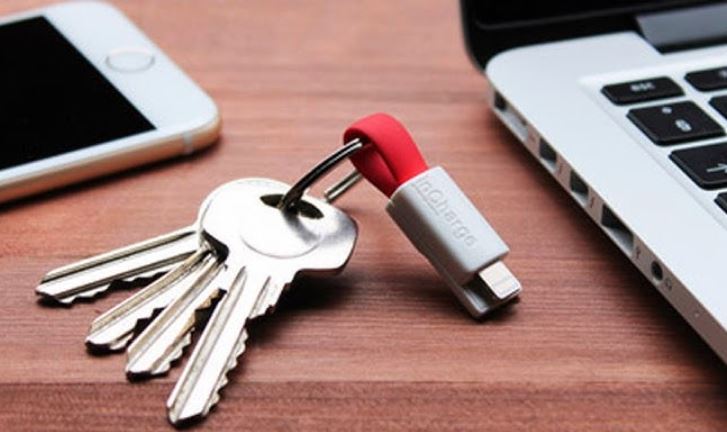
A USB-C keychain is a compact charging accessory designed to attach directly to your keys. It typically includes a short cable or connector that supports USB-C connections, allowing it to link your iPhone to a power source such as a laptop, power bank, or wall adapter.
Because it stays on your keyring, it’s meant to be:
- Always accessible
- Easy to carry
- Hard to forget
For many users, that permanence is its biggest appeal.
How a Keychain iPhone Charger Fits Into Daily Life
Unlike traditional chargers, a keychain iPhone charger doesn’t live in a bag or drawer. It lives with your keys one of the few items most people never leave home without.
This changes the psychology of preparedness. Instead of remembering to pack a charger, the charger is already there.
People often use it:
- During commutes
- While traveling
- At cafes or airports
- In emergency low-battery moments
It’s not designed to replace every charger, but to serve as a reliable backup.
Why USB-C Matters for iPhone Users
USB-C has become a widely adopted standard across modern electronics. Many laptops, power banks, and wall adapters now rely on USB-C ports.
For iPhone users, this means:
- Greater compatibility
- Easier access to power sources
- Less reliance on proprietary cables
A USB-C keychain fits naturally into this ecosystem, making it easier to borrow power wherever you are.
The Practical Advantage of Size and Portability
Portability often determines whether a charging solution gets used.
Power Banks
- Offer extra battery capacity
- Add weight and bulk
Full-Length Cables
- Work well at home
- Often forgotten when traveling light
USB-C Keychain
- Extremely small
- No extra bag space required
Because it adds almost no weight, it doesn’t feel like an inconvenience to carry.
Everyday Scenarios Where a Keychain Charger Helps
A keychain iPhone charger shines in small, real-world moments.
Public Places
You find a USB port at a cafe or airport but don’t have a cable.
Workdays
Your phone dips low, but your laptop has available power.
Social Situations
You need quick battery for directions, photos, or payments.
In these cases, having a charger on your keys can turn a stressful moment into a minor inconvenience.
Limitations: What It’s Not Meant to Do
While useful, a USB-C keychain isn’t a complete charging solution.
It typically:
- Charges more slowly than wall adapters
- Works best for short top-ups
- Depends on access to a power source
It’s designed for practicality, not power capacity.
How It Compares to Traditional Chargers
Understanding where it fits requires comparison.
Compared to Wall Chargers
- Less powerful
- More portable
Compared to Power Banks
- No internal battery
- Much lighter and smaller
Compared to Standard Cables
- Shorter length
- Easier to carry daily
Each option serves a different purpose, and many users find value in combining them.
Durability and Everyday Wear
Since a USB-C keychain lives on keys, durability matters. Daily movement, friction, and exposure can affect performance.
Users often look for:
- Reinforced connectors
- Flexible yet strong materials
- Secure keyring attachments
A well-made keychain charger is designed to withstand daily use without fraying or loosening.
The Role of Convenience in Tech Choices
Convenience often determines which tools become habits. Even the best technology fails if it’s inconvenient to use or carry.
The key advantage of a keychain iPhone charger is behavioral:
- You don’t have to remember it
- You don’t have to pack it
- You don’t have to think about it
That frictionless presence is what makes it appealing.
Who Benefits Most From a USB-C Keychain
This type of charger tends to suit certain lifestyles particularly well.
Busy Professionals
Always on the move, often working from laptops.
Travelers
Need lightweight, minimal gear.
Students
Move between classes with limited outlet access.
Minimalists
Prefer fewer items with multiple uses.
For these users, practicality matters more than speed.
Who Might Not Need One
Not everyone will find it essential.
It may be unnecessary if:
- You always carry a power bank
- You rarely leave home without a bag
- Your phone battery easily lasts all day
In these cases, it becomes more of a convenience than a necessity.
Charging Safety and Power Considerations
Using a USB-C keychain is generally safe when connected to reliable power sources.
Best practices include:
- Avoiding damaged ports
- Using stable power outputs
- Monitoring charging during extended use
As with any cable, basic care ensures long-term reliability.
The Psychological Comfort of Backup Power
Even when it’s not used, knowing you have a charger can reduce stress. That sense of preparedness has value on its own.
Many users report:
- Less anxiety about battery percentage
- More confidence leaving home without extra gear
- Fewer interruptions during busy days
Sometimes peace of mind is the real benefit.
How It Fits Into a Modern Charging Setup
Most people don’t rely on a single charging solution. Instead, they build a system.
A common setup includes:
- Wall charger at home
- Power bank for long trips
- USB-C keychain for emergencies
Each tool serves a specific role.
Why Simplicity Is Driving Adoption
Tech trends often move toward simplicity. People want fewer items that do more.
A USB-C keychain represents:
- Reduced clutter
- Increased readiness
- Practical design
It doesn’t promise to solve every problem but it solves one very common one.
Final Thoughts: Is It the Most Practical iPhone Charger You Can Own?
The answer depends on how you define practicality.
If you value:
- Always having a charger with you
- Minimal size and weight
- Emergency readiness
Then a USB-C keychain can feel surprisingly useful.
It won’t replace your main charger or power bank, but it fills a gap those tools leave behind. For many iPhone users, that gap matters more than they expected.
In a world where smartphones are essential and battery life feels unpredictable, small solutions can make a big difference. Sometimes, practicality isn’t about power it’s about presence.