
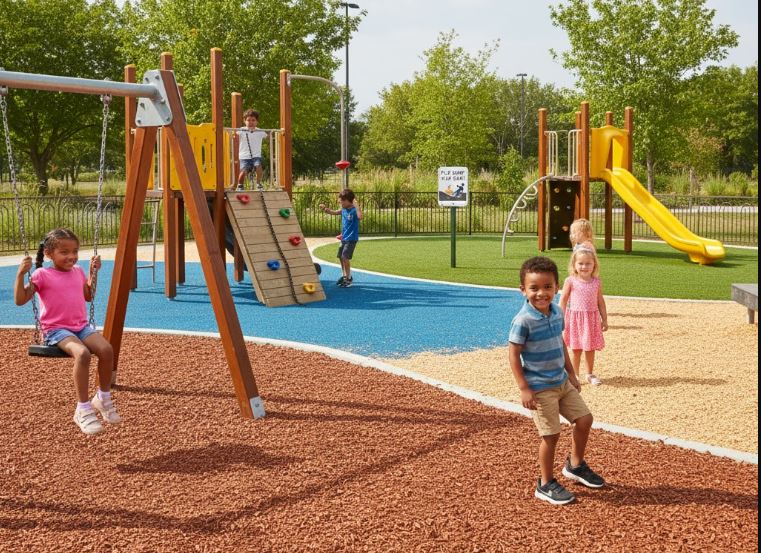
Playground Surfacing means the material placed beneath and around the playground equipment to prevent injuries and safe falls. It plays an important role in outdoor equipment, but most people fail to notice it. It lies beneath those monkey bars, slides, and swings.
The surfaces are mainly of two types:
Loose-filled surfaces: This is usually the one that is made of sand, wood fiber, and rubber mulch.
Unitary surfaces: These are the rubber tiles and mostly wet-pour rubber.
Each of them depends on the size and type of activities in the play area.
For instance, the poured-in rubber is the best option for school playgrounds and public places with high traffic. Whilst the rubber mats and artificial grass are best for a small garden playground.
Key Benefits of Quality Surfacing in Small Garden Playgrounds and Schools
Prevents Serious Injuries: A proper surfacing comes with a huge advantage — absorption. Serious injuries from falls are unavoidable, but good surfacing lowers the chances of getting serious injuries.
Encourages Longer Playtime: Playtime becomes a lot more relaxing and enjoyable when both children and teachers feel safe.
Supports Accessibility: Playing areas become more accessible to strollers and wheelchairs with smooth and good materials.
Easy Maintenance: Surfaces like artificial turf and rubber mats are easier to manage, which makes them ideal for homes and schools.
5 Safety Rules at Playground: Surfacing Edition
Every play area needs to have safety guidelines. Here are 5 simple and effective rules that reduce playground injuries from happening:
1: Always check for cracks, gaps, and loose tiles before playtime to prevent tripping.
2: Ensure that the loose-fill surface is at least up to 12 inches deep around fall zones.
3: Keep the play area from getting wet to prevent slipping.
4: Teach the kids to use playground equipment carefully. This rule alone can decrease the chances of accidents.
5: Rains and sandstorms alter the surfacing spots; checking before use is the best option.
Outdoor Play Equipment: Matching the Right Surface to the Equipment
Matching the playground surfaces with the playground materials is often the most overlooked criterion.
For instance, climbing frames and seesaws need a thicker, poured rubber surface for shock absorption. Whereas, in outdoor play equipment like slides and swings go best with the rubber mats and turf that cushion falls. Small playgrounds can have budget-friendly and smart solutions like foam mats and artificial turf.
Whatever option you like the best, just make sure to use playground equipment properly by firmly putting the safety surfacing.
Playground Rules for Students and Daycares: Creating a Safety Checklist
Consistency is key when it comes to maintaining safe play areas. Teachers need to make easy-to-understand and easy-to-follow rules for children.
Teach them rules like “take turns” and “no pushing”.
Note a safety checklist to make sure all the tasks of inspecting, cleaning, and maintaining the equipment are properly done before playtime.
Encourage the daycare employees and teachers to remind the kids to use the playground materials properly.
This not only teaches the kids safety but also builds discipline in them, which makes them confident.
How to Choose the Right Surfacing Material for Your Play Area
Before installing playground materials, here are some things you need to ensure first:
Age Group: Soft surfaces are the best for toddlers, whilst the older children can work with firmer materials
Playground Size: Small gardens need cozy and compact surfaces because they’re easy to maintain.
Weather Resistance: UV-resistant and water-draining surfaces are the best for outdoor playgrounds with Saudi Arabia’s unpredictable weather.
Budget and Maintenance: Rubber tiles are an ideal choice if someone needs a cost-effective and easy-to-maintain surface.
Playground Safety Checklist for Daycares
To keep a track, here’s a simple go-to checklist that every daycare should have:
Check up on the surfacing depth and coverage weekly.
Daily inspecting outdoor equipment for damage.
Clearing up the area to remove water and build-up.
Refill and tighten loose materials when needed.
Keep a record of maintenance and cleanup.
This doesn’t just make playgrounds safer but also prevents minor issues from becoming major ones.
Maintenance Tips: Keeping Playground Surfaces Safe Over Time
Maintaining a surface is essential to keep it from wearing down, even if it is the best of its kind. Here’s how you maintain it efficiently:
Rinse it regularly to remove the dust and sand from building up.
Re-fill the loose-fill materials seasonally.
Replace and fix damaged tiles right away.
Keep drainage to keep water from pooling up.
Get expert maintenance twice a year.
This routine ensures a safe, clean, and everlasting playtime for kids and a peace of mind for parents as well.
How to Assemble Safe Surfacing for Your Playground
Setting up your own personal playground doesn’t have to be that problematic and complicated.
Firstly, make sure to remove all the rocks from your garden or backyard and debris, and now level up the surface.
Now add a solid base layer like crushed gravel to make drainage.
Lay down your preferred surfacing.
Secure the edges firmly to prevent the frame or equipment from shifting and gaps.
Test before putting it to use by walking the area and checking all the soft spots.
Proper assembly ensures your equipment performs safely and supports the jumps and running.
Conclusion – Making Play Safe, Fun & Injury-Free
Making the play area safe and engaging isn’t the only motto; it’s also about providing them the freedom of exploring without an ounce of fear. Investing in the right type of surfacing in playground equipment not only reduces the chances of serious injuries but also makes the playtime joyful.
By following these rules, using a reliable playground safety checklist for daycares, and teaching the kids how to handle outdoor equipment properly. You can rest assured that your child is growing, learning, and playing in a safe and enjoyable environment.