
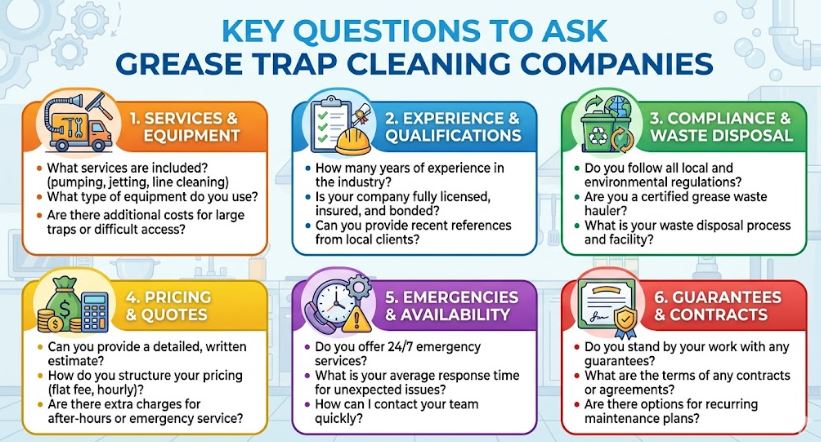
Managing a commercial kitchen is basically a non-stop juggling act. Between perfecting the menu and bracing for health inspections, there’s a never-ending list of things to do. But right at the top of that “less-than-glamorous” list is the grease trap. It’s the one thing nobody wants to think about until the kitchen floor starts flooding in the middle of a Friday night rush.
The real challenge isn’t just knowing you need a cleaning; it’s figuring out which grease trap cleaning service won’t leave you in the lurch. Here’s a straight-talking guide on what to look for—and the tough questions you should be asking—before you sign any contracts.
Why You Can’t Just Hire “Some Guy with a Pump”
Maintaining a grease trap isn’t just about sucking out the gunk and moving on. It’s actually about protecting your business. If the job isn’t done right, you’re looking at backed-up pipes, stomach-churning smells that clear out a dining room, and—worst of all—hefty fines from the council.
Professional commercial grease trap cleaning services do more than just empty the tank. They inspect the system, keep the paperwork straight for the inspectors, and catch small issues before they turn into €5,000 repair bills. If you don’t vet your provider properly, you’re basically just waiting for an expensive emergency to happen.
The “Must-Ask” Questions Before Hiring Grease Trap Maintenance
Don’t just take a low quote and run with it. Get these answers first:
- “Are you actually licensed to carry this stuff?”
In Ireland, handling kitchen waste is a regulated business. You need to know—not guess—that the company is fully licensed for waste collection. If they’re cutting corners and dumping grease where they shouldn’t, the legal trouble could easily land on your doorstep. Always ask for proof of their permit.
- “Will I get a waste disposal docket?”
This is a big one. A reputable service will always hand over a disposal docket (or manifest) that proves exactly where your grease ended up. Keep these in a folder! When an auditor or health inspector walks in, this piece of paper is your “get out of jail free” card. It proves you’re following the law.
- “What’s the damage for an emergency call-out?”
When is a grease trap most likely to fail? It’s rarely during the 10 AM prep shift on a Tuesday. It’s almost always at 8 PM on a frantic Saturday night when you’re at 100% capacity. Because of that, you’ve got to grill your provider on their after-hours response. To make sure you don’t get blindsided by a massive invoice, enquire about their turnaround times for emergencies and what they charge for such situations.
- “How do you decide how often to come by?”
Be wary of anyone who insists on a “once a month” schedule without looking at your kitchen first. A small café and a high-volume steakhouse’s grease traps in Ireland have very different needs. A pro will look at your flow and the size of your trap to find a “sweet spot” that keeps you clean without overcharging you for unnecessary visits.
- “Are you cleaning the whole thing, or just the top?”
There’s a massive difference between a quick pump and a proper service. Frankly, if they aren’t scraping the walls and verifying the flow in your pipes, they’re doing a half-baked job. Make sure their version of ‘clean’ includes a full pump-out, baffle scraping, and a thorough line check. You need a total reset to keep the inspectors happy, not a quick fix that fails the moment your kitchen gets busy again.
How to Spot a Winner
Once you’ve chatted with a few providers, look for these:
- No hidden fees tucked away in the fine print.
- They should be using modern vacuum tech, not just buckets and a prayer.
- If something goes wrong during the cleaning, you shouldn’t be the one paying for it.
In Ireland, many kitchens lean toward established names like Greaseco because they handle all the boring (but vital) stuff—like licensing and dockets—while being fast enough to show up when a pipe bursts during a bank holiday.
If there’s one place you shouldn’t cut corners, it’s your grease trap. Sure, you can find a bargain-basement price, but a cheap job often leaves you with a massive headache down the line.
What you’re really paying for is a stress-free operation. You want to walk into your kitchen and smell food, not old oil, and you want to know for a fact that your paperwork is bulletproof. That kind of security is worth way more than a few saved Euros on a monthly bill.
FAQs
- What’s the best way to clean a grease trap?
The best way to clean a grease trap includes:
- Regularly pumping out the grease trap (at least quarterly), scraping sides, and disposing of waste properly.
- Implementing a maintenance schedule with a professional service like Greaseco.
- Training staff on proper F&B disposal to reduce build-up.
- How often should a grease trap be cleaned out?
Grease traps should be cleaned out once a week, and the grease interceptors need to be pumped out once every month. The cleaning frequency should depend on the size of your grease trap and the volume of your operations.
- How to inspect a grease trap?
Inspect the grease trap regularly by checking the inlet and outlet pipes, looking for blockages, and measuring the grease layer thickness. Also, check for wear and tear, and ensure the trap is properly vented.