
Introduction
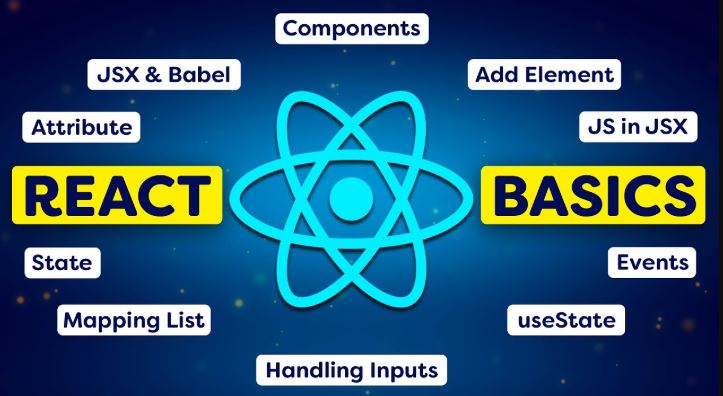
React.js is a popular JavaScript library. It helps developers build modern user interfaces while focusing on fast, interactive, and reusable components. React uses new ideas that feel different from JavaScript. This might confuse new users. Therefore, a clear understanding of core concepts is necessary to build a strong foundation for advanced topics. The React Online Course aims to provide the right guidance to aspiring professionals. This guide explains the most important React.js concepts every beginner should focus on. Read on to know more.
React.js Concepts Every Beginner Should Focus On
Here are some React.js concepts every beginner should know.
1. Components and Their Role
Components make an integral part of React.js. These represent a small part of the user interface. Buttons, forms, pages, etc. are some types of components in React.js. They help React break large interfaces into small reusable parts where each component manages its own structure. This improves readability and maintenance.
A functional component is the most common type used today.
This component returns JSX. JSX looks like HTML but works within JavaScript. React combines many components to develop a complete application.
2. JSX and Its Syntax Rules
JSX stands for JavaScript XML. Developers use it to write UI code in a readable format. JSX gets converted into JavaScript by the build process. JSX follows strict rules. It requires one parent element. It uses className instead of class. It uses camelCase for attributes.
JSX improves clarity and reduces complex DOM code. Beginners should practice JSX to gain confidence.
3. Props and Data Flow
Props allow data to move from one component to another. They work like function arguments. Props help make components dynamic and reusable. React follows a one-way data flow where the parent components send data to child components.
Props remain read only. A component should never modify its own props. This rule keeps the application predictable.
4. State and Component Behaviour
State stores data that can change over time. It controls component behaviour and rendering. When state changes React updates the UI automatically. Beginners should understand state clearly because it drives interactivity.
State lives inside a component. Updating state triggers re rendering. This feature makes React fast and efficient.
5. Handling Events in React
React handles events using camelCase syntax. Event handlers receive functions not strings. React wraps browser events into a synthetic event system.
Event handling feels similar to JavaScript but follows React rules. Beginners should practice events to build interactive features. Aspiring professionals are suggested to get the React Certification for the best career prospects in this field.
6. Conditional Rendering
Conditional rendering controls what appears on the screen. React uses JavaScript conditions to render elements. This concept helps show or hide UI parts based on logic.
This technique keeps the UI dynamic. It avoids unnecessary DOM updates.
7. Lists and Keys
React renders lists using the map function. Each list item needs a unique key. Keys help React track changes efficiently.
Keys improve performance and prevent rendering issues. Beginners must understand their importance.
8. Hooks and useEffect
Hooks allow functional components to use state and lifecycle features. The useEffect hook handles side effects like API calls and subscriptions.
The dependency array controls when the effect runs. This concept is critical for managing application logic.
9. Controlled Components and Forms
Forms in React use controlled components. React controls input values through state. This approach ensures better validation and consistency.
Controlled forms give full control over user input. Beginners should practice this pattern often.Controlled forms give full control over user input. Beginners should practice this pattern often.
Conclusion
React.js becomes easier when beginners focus on core concepts first. React JS Training in Noida offers structured learning with hands on projects focused on industry level React development. Components create structure and reuse. JSX improves readability. Props and state manage data flow and behaviour. Events and conditional rendering add interactivity. Lists and keys improve performance. Hooks simplify logic and side effects. Controlled forms ensure clean input handling. Knowing these basics builds confidence of the developers and prepares them for advanced React topics.